Seeing your baby on an ultrasound screen is one of the most memorable moments of pregnancy, and many parents wonder whether a 3D or 4D ultrasound can bring that picture to life. If you are curious about what these scans actually show and what to realistically expect, here is a clear and honest guide.
What Are 3D and 4D Ultrasounds?
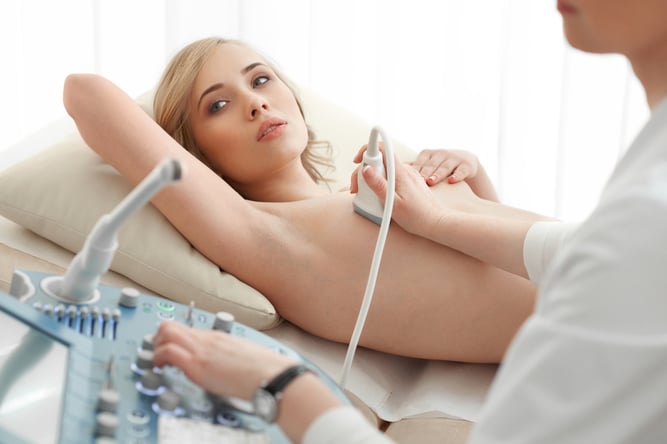
All pregnancy ultrasounds use sound waves, not radiation, to create images of your baby. The difference between the types comes down to how those sound waves are processed and displayed.
- 2D ultrasound is the standard, flat, black-and-white image used for routine prenatal care. It shows cross sections of your baby and is the format your provider relies on for medical evaluation.
- 3D ultrasound takes many 2D images from different angles and uses software to build a still, three-dimensional picture. This is what produces those recognizable images of a baby's face and features.
- 4D ultrasound adds the dimension of time. It is essentially 3D imaging in motion, so you may see your baby yawn, stretch, or move a hand in something close to real time.
It helps to think of 2D as a single slice, 3D as a sculpted snapshot, and 4D as a short video of that sculpture moving.
How Do They Differ From a Standard 2D Scan?
The most important thing to understand is that 2D ultrasound remains the workhorse of prenatal care. When your provider measures growth, checks the position of the placenta, examines the heart chambers, or evaluates organ development, they are looking at detailed 2D images. The flat view actually gives the clearest internal detail for medical assessment.
3D and 4D scans are generally added on top of standard imaging rather than replacing it. They render the surface of your baby, which is wonderful for bonding and for seeing facial features, but they are not a substitute for the careful, slice-by-slice review a 2D anatomy scan provides. In most pregnancies, 3D and 4D images are a nice extra, not a medical necessity.
What Can a 3D or 4D Ultrasound Show?
When conditions are favorable, these scans can offer a surprisingly lifelike view of your baby. Parents often see:
- Facial features such as the nose, lips, and cheeks
- Movements like stretching, yawning, sucking a thumb, or hiccuping
- The shape of the hands and feet
- Expressions that can look like smiling or frowning
In some cases, the added surface detail can also help your provider evaluate specific findings, such as certain facial or spinal structures, when a closer look is warranted. Your provider will let you know if a 3D or 4D view adds useful clinical information in your situation.
It is worth setting expectations. Image quality depends heavily on factors you cannot control, including your baby's position, the amount of amniotic fluid around the face, the location of the placenta, and body tissue. If your baby is facing your spine or has a hand in front of the face, even a skilled sonographer may not capture a clear portrait that day.
When Are These Scans Usually Done?
For the clearest 3D or 4D facial images, the sweet spot is generally between 26 and 32 weeks of pregnancy. Before this window, your baby may not have enough fat under the skin for defined features. After it, the baby is larger and often lower in the pelvis with less room to move, which can make the face harder to capture.
Timing also depends on the purpose. A medically indicated scan is scheduled whenever your provider needs the information. A keepsake or bonding scan is usually timed for that late-second to early-third trimester range to give you the best chance at a good image.
Are 3D and 4D Ultrasounds Safe?
Ultrasound has a long track record of safety in pregnancy and does not use ionizing radiation. When performed by trained professionals for medical reasons, it is considered very safe. Major medical organizations, including the American College of Obstetricians and Gynecologists (ACOG) and the FDA, support the principle of using ultrasound only when there is a medical reason and keeping exposure to the lowest level needed to get the necessary information.
For this reason, those same organizations discourage purely commercial keepsake ultrasounds performed without medical oversight, especially long sessions done only to make videos. The concern is not a proven harm but rather the principle of not exposing your baby to ultrasound energy without a clear purpose and without trained clinical staff. The safest approach is to have any 3D or 4D imaging done within a medical setting where a qualified professional is involved.
Always talk with your own provider before scheduling an elective scan, and let them know about any imaging you have had outside their office.
When to Call Your Provider
An ultrasound, of any type, is never the right way to handle a pregnancy concern. If you experience any of the following, contact your provider right away or seek emergency care rather than waiting for a scan:
- Heavy vaginal bleeding
- Severe abdominal or pelvic pain
- A noticeable decrease in your baby's movements, especially in the third trimester
- Leaking of fluid from the vagina
- Severe or persistent headache, vision changes, or sudden swelling
- Fever, chills, or signs of infection
- Regular or painful contractions before 37 weeks
If you cannot reach your provider and your symptoms feel severe, go to the nearest emergency room or call 911.
3D and 4D Ultrasound at Garden OB/GYN
At Garden OB/GYN, our experienced team provides ultrasound imaging as part of comprehensive, attentive prenatal care across our New York City and Long Island locations. We use the right type of scan for your stage of pregnancy and your clinical needs, and we are always happy to talk through what 3D and 4D imaging can and cannot offer so your expectations are realistic and your peace of mind is protected.
Schedule an appointment with Garden OB/GYN to discuss your prenatal care and find out whether a 3D or 4D ultrasound is a good fit for your pregnancy.
This article is for general education and is not a substitute for medical advice. If you are experiencing severe symptoms, seek care right away.